
 GOOGLE REVIEWS

What Makes a Good Finger Guard for Nurseries and Schools?
(And what facilities should pay attention to when choosing one)
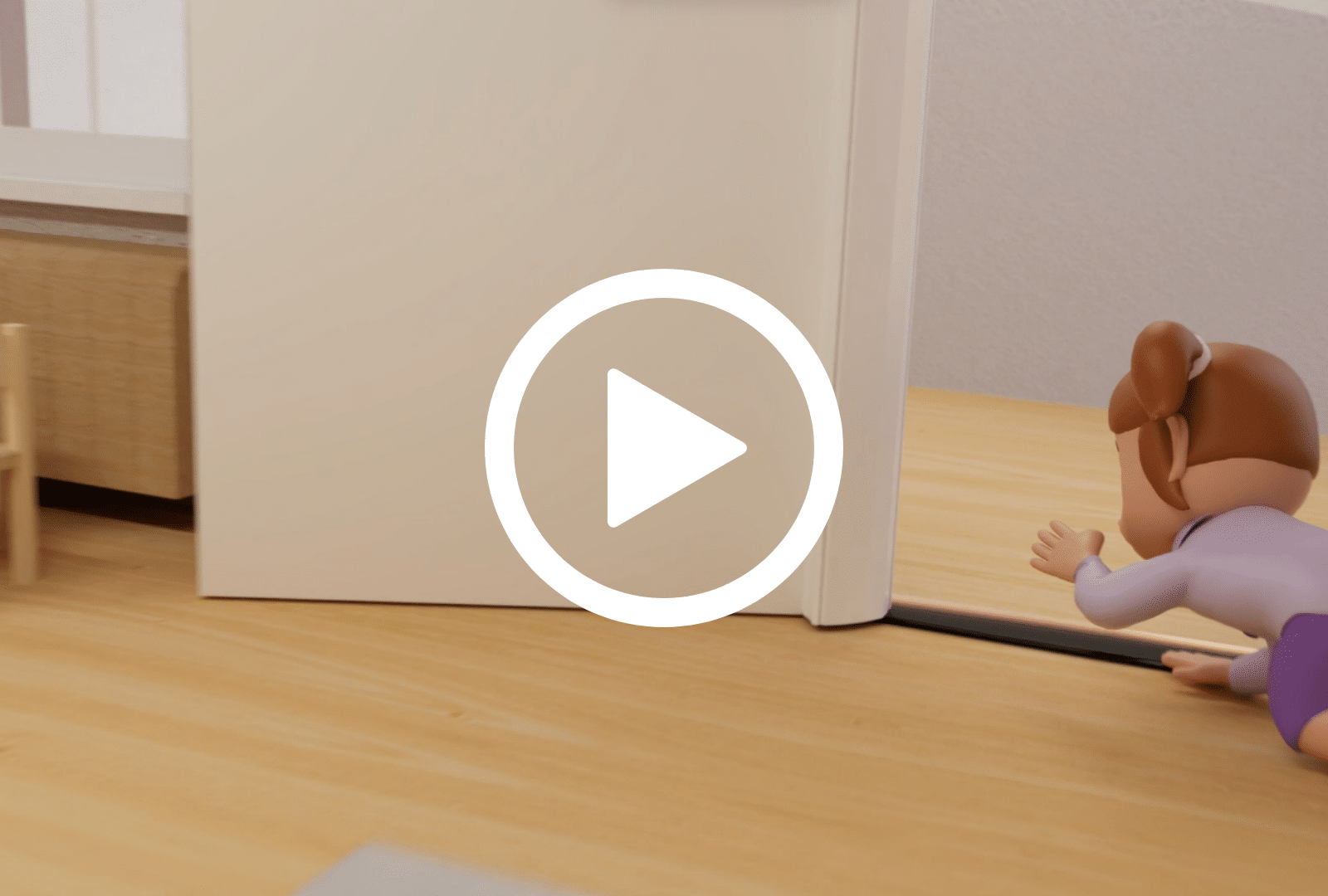
Watch this video to get a quick, practical overview of what separates a reliable finger guard from less effective alternatives.
At a glance: What defines a high-quality finger guard?
- reliably protects against finger-trapping injuries – especially for children aged 1–8
- covers both sides of the door completely and extends from 1 cm above the floor up to at least 180 cm
- is made from robust, non-compressible materials
- is certified according to relevant standards (e.g., DIN EN 16654) and withstands over 1,000,000 door cycles
- is easy to clean, simple to install, and remains safe over time
- note: fabric or roller-based solutions can be useful in some situations, but do not always meet the requirements needed in professional childcare environment
The safety of small hands plays a central role in nurseries, kindergartens, and schools. Children between the ages of 1 and 8 are particularly at risk of getting their fingers caught in door gaps.
This is why many facilities look for a solution that provides reliable protection, is durable, and can be seamlessly integrated into daily operations.
There is a wide range of options on the market – from simple fabric or roller solutions to professional, robust protection systems.
But what truly makes a good finger guard? And what should facilities consider to ensure that the solution works reliably in day-to-day use?
1. Reliable Protection on the Hinge Side
The most important question is:
Can the system effectively prevent children from putting their fingers into the hinge gap?
A high-quality finger guard ensures that the hinge side is fully closed, leaving no gaps where fingers could slip through. Robust door finger guards are essential for effective protection.
Flexible fabric or roller-based solutions can work depending on the design, but they do not always offer the same level of stability – particularly under heavy use or when children apply pressure. This makes it crucial to look closely at materials and construction.
2. Full Coverage on Both Sides of the Door
A good finger guard protects both sides of the door – the hinge side and the opposite side.
It is also important to cover the entire danger zone: the guard should begin at least 1 cm above the floor and extend up to a height of at least 180 cm.
This ensures reliable protection even for taller children.
Some systems – including certain roller solutions – leave a gap at the bottom or only cover part of the gap or one side of the door. This does not make them automatically unsuitable, but facilities should ensure that the chosen solution really covers both sides completely and across the full relevant height.
3. Certified Safety and Standards
Professional facilities prefer products with proven, independently tested safety.
Key criteria include:
- DIN EN 16654:04.18 – the European safety standard for finger protection systems
- tested material and manufacturing quality
- documented independent safety testing, such as TÜV certification
Such standards help facilities ensure that a finger guard is reliable and meets the requirements of professional environments.
The Finger Alert Professional is an example of a system that demonstrably meets these standards.
4. Durability for Intensive Daily Use
Doors in nurseries and schools are opened and closed dozens or even hundreds of times a day.
A finger guard should therefore:
- last for several years
- require little maintenance
- withstand at least 1,000,000 door cycles
In high-traffic areas such as group rooms, cloakrooms, or sanitary areas, a stable and long-lasting solution is particularly important.
Lighter fabric or roller-based systems may wear out more quickly. This doesn’t mean they are unsuitable in general – but their limitations should be realistically assessed.
5. User-Friendliness in Everyday Use
A finger guard should:
• be easy and quick to install
• be simple to clean
• be maintainable without special tools
• stay securely in place for months and years
This greatly simplifies daily routines for staff and ensures the protection continues to function reliably.
Key Evaluation Points for Finger Guard Solutions
Alongside fixed, robust systems, some facilities also use alternative or flexible options – such as roller covers, fabric variants, or modular systems that can be attached quickly. Such solutions may be suitable depending on the door type, frequency of use, and spatial conditions.
To ensure reliable performance, facilities should check – regardless of the system – whether the following criteria are met:
- protection on both sides of the door, without gaps
- adequate height coverage (ideally from 1 cm to at least 180 cm)
- non-compressible materials that remain stable under pressure
- complete coverage of both hinge areas
- suitability for high-traffic doors (e.g., group rooms or sanitary areas)
- easy cleaning and secure mounting
Conclusion – What Really Matters
The best choice is one that has been proven to reliably protect small fingers and matches the facility’s level of daily use.
Professional systems such as Arte Viva’s Finger Alert Professional – TÜV-tested and certified according to DIN EN 16654 – fully meet these requirements.
A good finger guard should:
- provide reliable protection
- cover both sides of the door from 1 cm up to 180 cm
- be certified and independently tested
- withstand daily use in nurseries and schools
- and be easy to handle
The best solution is the one that offers proven, reliable protection and suits the environment in which it is used.