
 GOOGLE REVIEWS

My Child Got Burned on a Radiator: What Now?
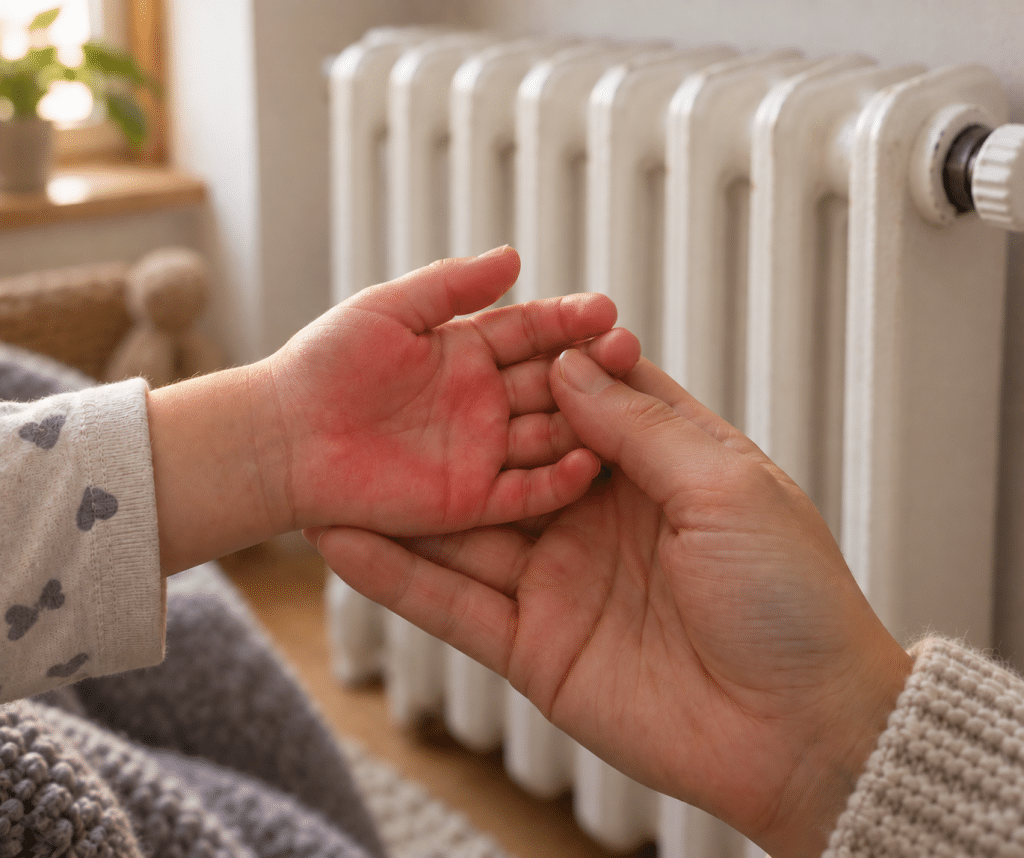
Radiators are common in many schools and childcare centers, especially in older buildings – and that’s exactly why the risk they can pose is so easy to overlook. Depending on the heating system, radiators can reach high temperatures, with older systems historically designed to operate at temperatures of up to 90°C (194°F).
This post summarizes what to do in an emergency, based on current burn first-aid guidance from the American Red Cross – and what schools and childcare centers can do long-term to reduce the risk in the first place.
Important note: This post is for general informational purposes only and does not constitute medical advice or guidance. It is not a substitute for first-aid training, professional medical care or an individual medical assessment. First-aid recommendations and emergency procedures may vary by country. Always follow applicable local guidance and seek professional medical advice when needed. In an emergency, contact your local emergency services immediately.
Immediate steps: The first minutes after the burn
- Make sure the area is safe.
Check the scene for any ongoing danger and move the child away from the hot radiator. - Check the burn.
Look for signs such as redness, swelling, blisters, changes in skin color, or severe pain. Burns involving deep layers of skin, a large area of the body, or the face, mouth, nose, hands, feet, joints, or groin require immediate emergency medical treatment. The same applies to burns around a limb, chest, or neck and burns in very young children. - Call 911 if emergency care is needed.
If the burn shows any of the emergency signs above, call 911 and get appropriate first-aid equipment. - Remove clothing or jewelry around the burn.
Remove clothing or jewelry from the burned area unless it is stuck to the skin. Do not pull off anything that is stuck. - Cool the burn with running water.
Place the burned area under clean, cool running water for 5–20 minutes. If cool water is unavailable, lukewarm water is okay. - Use a cool compress if there is no running water.
If clean running water is not available, apply a cool or cold compress to the burn. - Do not try to clean a severe burn.
The American Red Cross advises against cleaning a severe burn because this can cause additional damage to the skin. - Watch the child for signs of getting too cold.
When cooling a large burn, be alert for signs of hypothermia, especially in children.
When should you seek emergency medical care?
Contact your local emergency services if a burn requires immediate medical attention. Seek professional medical care for burns that are large, deep or affect sensitive areas such as the face, hands, feet or joints. Serious chemical or electrical burns also require professional evaluation. Young children may be particularly vulnerable to burns and becoming too cold.
If you are unsure about the severity of a child’s burn or the appropriate treatment, seek professional medical advice. Healthcare professionals can assess the injury and determine whether further or specialised treatment is needed.
Why prevention matters so much
Burn injuries can have consequences that extend far beyond the initial accident. Depending on their severity, they may require ongoing wound care, specialist treatment and rehabilitation and can result in scarring. That’s why it is worth taking a closer look at a potential hazard in schools and childcare centers that can easily fade into the background because it is such an ordinary part of the room: the radiator.
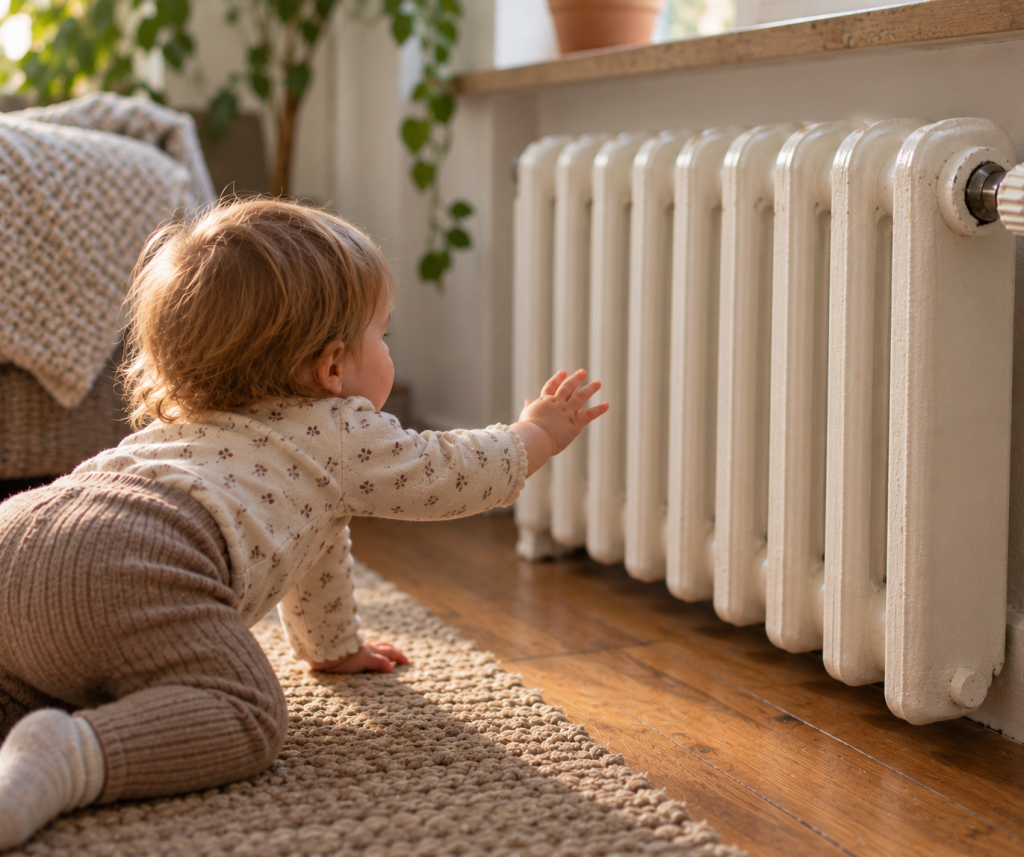
Radiators are hot surfaces. How quickly a contact burn develops depends on factors including the temperature of the surface and how long the skin remains in contact with it. Young children are especially vulnerable because their skin can burn more quickly and deeply than adult skin.
What can actually be done?
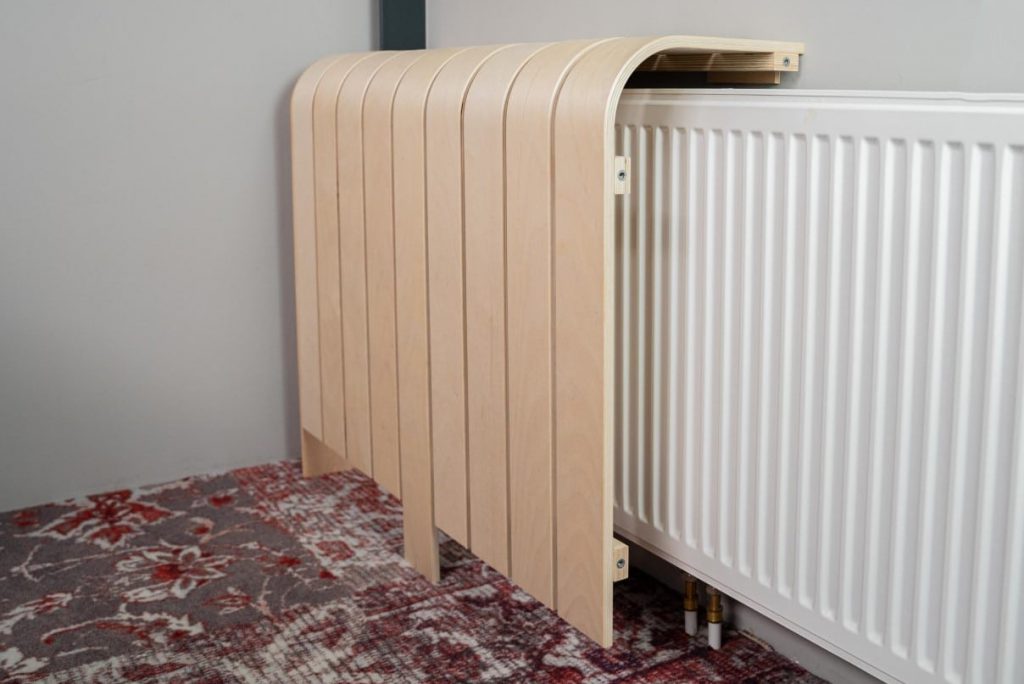
- Prevent direct contact with hot radiators. A well-designed radiator cover creates a physical barrier between children and the hot surface while allowing warm air to circulate.
- Consider edges as well as heat. Radiators can also create an impact hazard in areas where children play, making rounded, child-friendly materials particularly useful.
- Include radiators in facility safety assessments. Heating equipment and other hot surfaces should be considered alongside more obvious hazards in spaces used by young children.
- Think ahead during renovations and new construction. Incorporating child-safety measures during planning is generally easier than addressing hazards after an incident occurs.
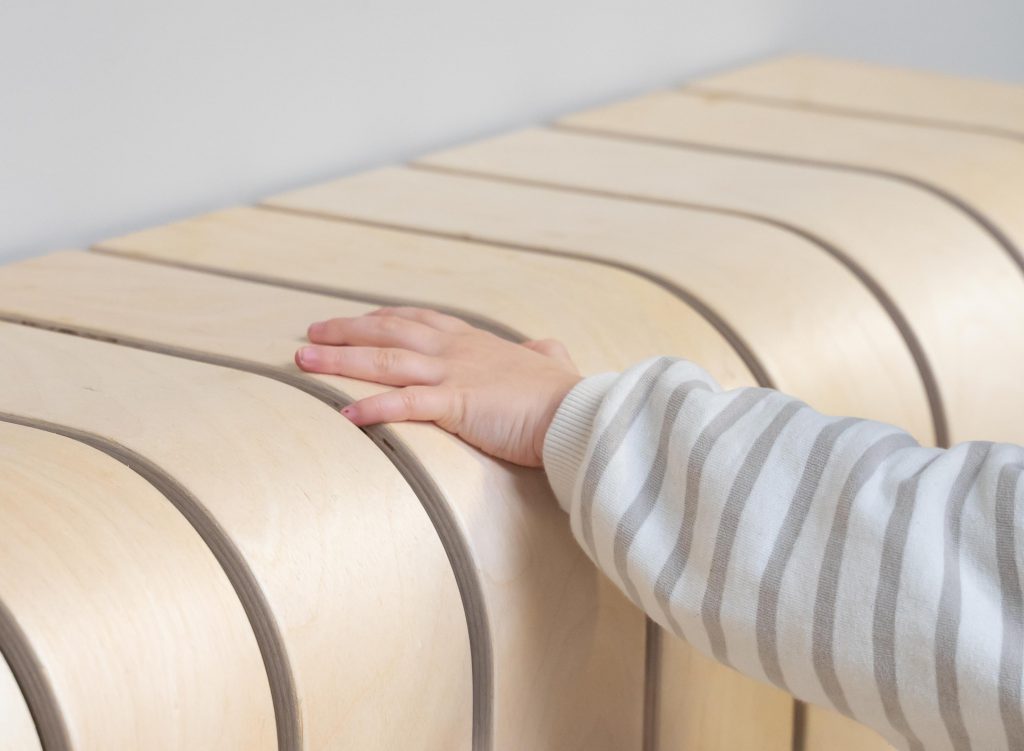
A child-safe radiator cover, such as the one offered by Arte Viva for childcare centers and schools, fully encloses the radiator to help prevent children from coming into direct contact with hot surfaces and hard edges, while ventilation openings allow warm air to circulate.
The bottom line
If a child is burned, move them away from the heat source and seek appropriate first aid and medical assistance. Always follow local first-aid guidance and contact your local emergency services if the burn is serious or you are unsure how to respond.
In the long run, however, the safest burn is the one that never happens. In spaces designed for young children, preventing direct access to hot radiators with appropriate covers is a straightforward hazard worth addressing before an accident occurs.
This article provides general information only and does not replace professional medical advice or first-aid training. First-aid recommendations may vary by country. Always follow applicable local guidance and contact your local emergency services in an emergency.